Heliskiing in the Aosta Valley · under the Matterhorn · organised from Val d'Isère
Heliskiing at Cervinia: under the Matterhorn, ski one of the finest massifs in the Alps
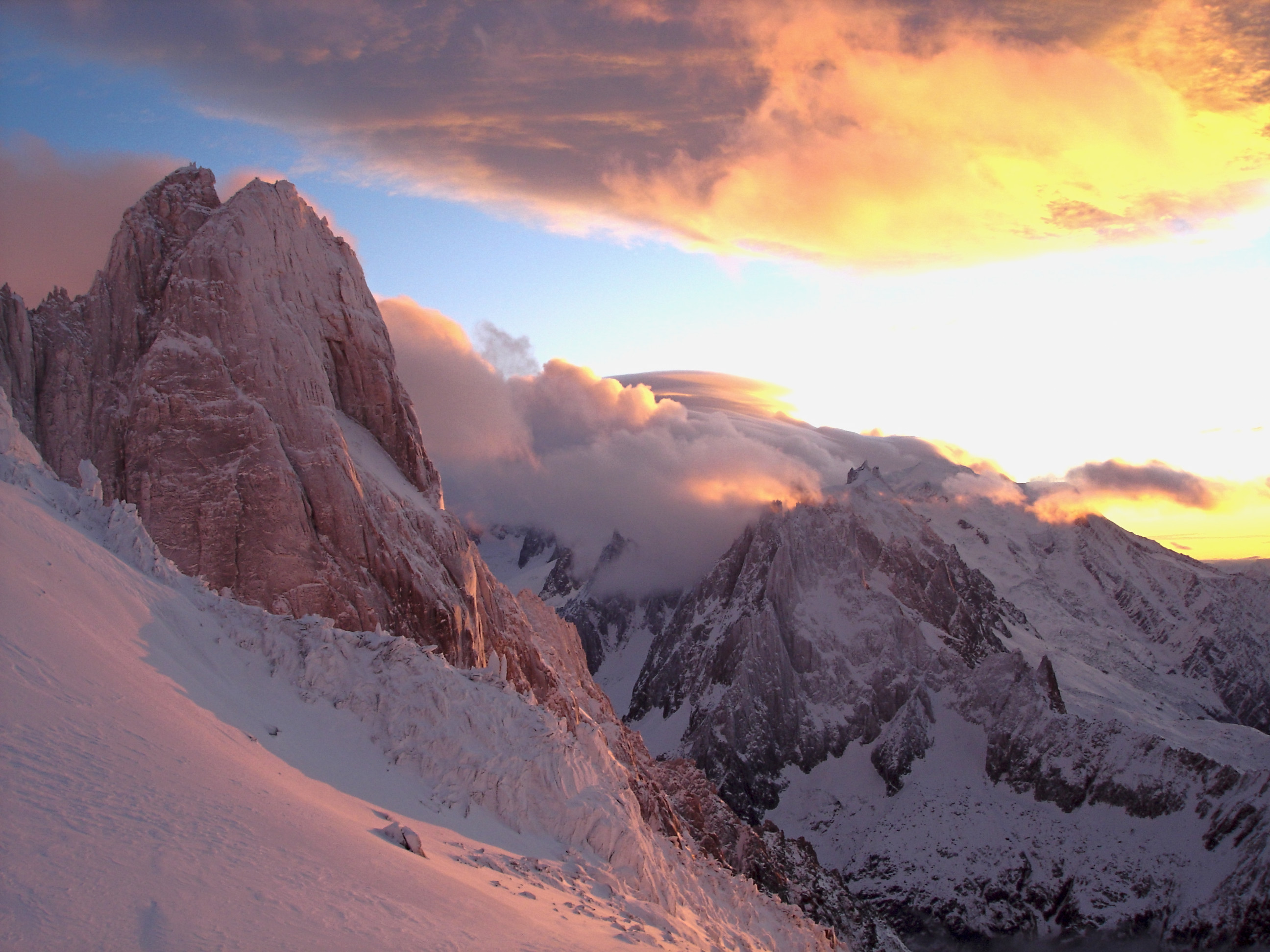
Heli skiing at Cervinia drops you above 4,000 metres at the foot of the Matterhorn to ski the Monte Rosa glaciers, with a signature line that falls 2,350 metres into the Zermatt valley for the most seasoned.
In brief
- Where
- Breuil-Cervinia, Aosta Valley: at the foot of the Matterhorn, gateway to the Monte Rosa massif
- Terrain
- around ten reference sectors, from the introductory glacier to the big glacier route; drops from 3,200 to above 4,000 m
- The signature line
- the Silbersattel, between the Dufourspitze and the Nordend: a drop below the Silbersattel, at around 4,200 m, then 2,350 m of descent to the Zermatt valley; glacier experts only
- Level
- from heliski intermediate (Bettolina / Château des Dames sector) to seasoned glacier expert, depending on the sector
- Guiding
- a mountain guide; avalanche airbag pack, transceiver, shovel and probe provided; roped up on the glacier
- Format
- Cervinia is a long way from Val d'Isère: it's a destination for a two- to three-day stay rather than a single day
- Price
- on request, according to the number of rotations, the group size, the accommodation and the transfer
- Season
- the heart of winter and early spring, when snow cover and the weather window allow
Give Cervinia two or three days from Val d'Isère
Cervinia lies a good way from Val d'Isère, and that shapes the whole trip. You cross into Italy, run down the Aosta Valley and climb back up to the head of the Valtournenche, several hours on the road. So we offer heliskiing at Cervinia for what it is: the destination for a stay of two or three days, time enough to ski a mountain unlike anything on our side of the range.
Because here the scale changes. Cervinia sits at the foot of the Matterhorn, the rock pyramid the Italians call the Cervino, and it opens onto the glaciers of Monte Rosa, the highest snowfields in the Alps after Mont Blanc. You ski above 3,500 metres, higher than any lift reaches at home. The snow stays cold for longer, the air is dry, and the big glacier descents are counted in thousands of metres of vertical. It's what you come looking for once you've skied everything closer to home.
See all our heliski formats · Tell us your dates
Ski the signature line: the Silbersattel and the run to Zermatt
A descent for the few, and one we approach with restraint. The Silbersattel is a snow saddle on the Monte Rosa ridge, between the Dufourspitze (Switzerland's highest point) and the Nordend. You're dropped below the Silbersattel, at around 4,200 metres, then head over to the north side for a descent that runs all the way to the floor of the Zermatt valley: close to 2,350 metres of vertical in one go, on open glaciers.
It's the signature line of heliskiing at Cervinia, and it's genuine high-mountain terrain. Crevasses, seracs, roping up on the exposed sections, a fine read of the snowpack at altitude: we commit to it with a group of experts, a mountain guide who knows the glacier, and a clear weather window. The way back is on the Swiss side, using the lifts, to loop round to Italy. A line like this is prepared for, and savoured.
From your first heli drop to glacier expert, step by step
Cervinia welcomes far more than mountaineers. The massif offers a real progression, and that's what makes it a good destination for a stay. For a first drop, the Château des Dames sector or the access zones of the Plateau Rosà give broad, easier-to-read slopes where you find your feet before stepping up to high-mountain terrain. It's fine off-piste skiing, light on glacier commitment.
Then the terrain steps up, sector by sector: the Cherillon and Montabel glaciers on the Matterhorn side, the Verra glacier to the south with its views of Castor and Pollux, the Roisetta and its 2,000 metres of descent in the sun, up to the big glacier routes of the Silbersattel and the Tête de Valpelline. These are reference zones, and the day's lines follow the snow.
Closer to Val d'Isère, heliski at Valgrisenche, heliski at La Thuile and heli skiing at Courmayeur make a fine day out; heli skiing at Zermatt, on the Swiss side of the Matterhorn, and heliski at Sestriere are enjoyed as a stay, like Cervinia.
A quote shaped around your stay
Each heliski programme is put together to order, and a stay at Cervinia more than most. The price is set according to the number of rotations (and so the vertical skied), the group size, the accommodation on the spot and the transfer from Val d'Isère.
Tell us your dates, the number of skiers, your level and the volume of skiing you're after, and we'll put together a quote within 24 hours.
Choose your Cervinia sector, from the most accessible to the most committing
Around ten reference sectors map out the terrain at Cervinia. Each is a zone of mountain rather than a fixed itinerary or a published drop point, with its landmark peaks, its aspect and its character. The guide builds the day by the snow, the weather and the group's level.
Plateau Rosà, access zone (around 3,500 m, ~900 m of descent). The highest glacial plateau of the ski area, straddling Italy and Switzerland. Introductory terrain to warm the legs, on some of the highest skiing in the Alps.
Château des Dames (around 3,350 m, ~1,400 m). The Cervinia classic, north-facing, dropping back towards the Lac Bleu and the Breuil-Cervinia basin. An intermediate to advanced sector, a good way into high-altitude heliskiing.
Colle del Breuil / Col de Breuil (around 3,281 m, ~1,330 m). A south-facing route under the Matterhorn, back down to the Cervinia basin. Intermediate terrain, often in the sun.
Cherillon / Montabel (around 3,200 m, ~1,250 m). A descent on the Matterhorn side, past the Oriondé refuge and the Cherillon and Montabel glaciers. Glaciated but within reach of good advanced skiers, south-facing.
Petit Tournalin (around 3,207 m, ~1,200 m). A Valtournenche summit, aspect varying with conditions, finishing towards Cheneil or Maën. Intermediate to advanced.
Verra glacier / Col di Verra (around 3,910 m, ~1,400 m). A big glacier route to the south: the Verra plain, the Mezzalama and Lambronecca refuges, views of Castor, Pollux and Monte Rosa. Advanced glacier terrain, with possible finishes towards Champoluc, on the same massif as our Monterosa heliski base.
Roisetta / Roisette (around 3,300 m, up to ~2,000 m). A long, scenic descent to the south, finishing towards Cheneil or Maën. One of the biggest sunny verticals in the area.
Dôme de Tsan (around 3,350 m, ~1,500 m). A north-facing sector of the upper Valtournenche, glaciated, for advanced to expert skiers. Drop point chosen on the day.
Tête de Valpelline (around 3,850 m, ~2,000 m). A major glacial summit between the Tête Blanche and the Dent d'Hérens, north-west-facing high-mountain terrain, finishing on the Zermatt or Valpelline side depending on the route. Glacier experts.
Silbersattel / Monte Rosa (drop at around 4,200 m, ~2,350 m). The signature line. A drop below the Silbersattel, on the Monte Rosa ridge between the Dufourspitze and the Nordend, and a glacier descent to the Zermatt valley. Glacier experts only; roping up and a clear weather window required.
Each day the guide picks a few of these sectors, in whatever order the snow suggests, looking for the best of it with the group's level in mind.
Your stay: two to three days under the Matterhorn
Cervinia is a long way from Val d'Isère (several hours on the road through the Aosta Valley), and high altitude often calls for a day to acclimatise. So we build Cervinia as a stay of two to three days rather than a there-and-back in the day.
How it works. We reach the Valtournenche, sleep on the spot, and ski two or three days in a row. That leaves time to start on the introductory sectors, step up the terrain, and keep some slack on dates if the weather window closes one morning.
What we handle for you · the link with the Italian base, the mountain guide, the safety kit, the rhythm of the days, and arranging accommodation to suit your group. What you bring · your skis and boots (wide freeride skis recommended, hire possible), your high-mountain clothing, and the legs for several long descents in a row.
The transfer from Val d'Isère and the exact format of the stay are settled with you at booking. Tell us your dates and your group, and we'll build the programme around you.
Your safety on the glacier, with a mountain guide
At Cervinia you ski in the high mountains, on open glaciers, and at this altitude safety is the very condition of the day.
The kit, provided and checked. Every skier sets off with an avalanche airbag pack, a transceiver, a shovel and a probe. We hand everything out before the first flight, run the send-and-receive check, and run it again if the group is split across several rotations.
The glacier: rope and crevasses. On the big sectors (Silbersattel, Tête de Valpelline, Verra) you move across crevassed glaciers. The guide decides when to rope up, picks the passages, skirts the serac zones and sets the track. This is glacier travel, with all the rope discipline that implies.
The snowpack, read every morning. The guide cross-checks the Aosta Valley avalanche bulletin against his own observations and the week's history before settling on a sector. At altitude the wind reshapes the snow from one day to the next: a slope that was skiable yesterday may have changed by this morning.
Turning back at the right moment. A good guide is judged as much by the rotations called off as by those strung together. If visibility drops, the avalanche danger is high or the window is too short for the Silbersattel, we change sector or keep the heli on the ground. That judgement comes with every rotation you book.
> Above Cervinia you ski open glaciers, with no markers and no patrol. Kit and guiding reduce and manage the avalanche and crevasse risk, which remains part of the high mountains. A day can be cut short, moved or called off at any time according to the snow, the weather and the visibility. The mountain sets those terms, and we keep to them.
Pick your moment: season and snow under the Matterhorn
Heliskiing in the Aosta Valley hangs first on snow cover and the weather window. The heart of winter usually brings the coldest, lightest snow on the high north faces, and Cervinia, being so high, keeps good powder late into the season. Early spring brings corn snow to south-facing sectors like the Roisetta or the Col de Breuil, skied at the right moment, as the snow frozen overnight begins to soften.
Altitude counts too: above 4,000 metres the body works harder than it does in Val d'Isère and the breath comes shorter, one more reason to build Cervinia as a stay. Heliskiing also stays tied to visibility: the helicopter flies in clear air, and the Silbersattel needs a cloudless sky. We always keep some slack on dates, and fall back on the lower sectors if the window shuts.
Safety on the glacier. Heliskiing at Cervinia takes place on high-mountain glaciers, unmarked and unpatrolled. We provide and check the safety kit before every flight (avalanche airbag pack, transceiver, shovel and probe). The guide manages roping up on the glacier and follows the avalanche bulletin and the state of the snowpack every day, and we adapt, or postpone, each day if conditions require it. Equipment is where safety begins; preparation, reading the terrain and the decision to turn back when needed do the rest. Heliskiing is legal in Italy, where all our drops take place; in France it is banned.
FAQ
Is heliskiing legal at Cervinia?
Yes. Heliskiing is permitted in Italy, including in the Aosta Valley around Cervinia, whereas in France it is banned. That's precisely what lets us organise it from Val d'Isère: you cross the border to ski days that are entirely legal on the Italian side.
What level of skiing do you need for heliskiing at Cervinia?
It depends on the sector. A good off-piste skier at ease in all snow can start on the introductory sectors such as the Château des Dames or the Plateau Rosà. The big glacier routes (Silbersattel, Tête de Valpelline) are reserved for experts used to glaciers and to moving roped up. We set the programme by your real level.
What is the Silbersattel, and its descent to Zermatt?
The Silbersattel is a snow saddle on the Monte Rosa ridge, between the Dufourspitze and the Nordend. You're dropped below the Silbersattel, at around 4,200 metres, and ski the north side down to the Zermatt valley, some 2,350 metres of vertical on open glaciers. It's Cervinia's signature line, reserved for glacier experts and a clear weather window.
Why is Cervinia skied as a stay rather than a day trip?
Because Cervinia is a long way from Val d'Isère, several hours on the road through the Aosta Valley, and high altitude often calls for a day to acclimatise. A stay of two to three days leaves time to step up the terrain sector by sector and to keep some slack if the weather closes in one morning.
Can you choose the descents or the drop points in advance?
No, and that's by design. The operators keep drop points flexible, and the programme is decided on the morning itself according to the snow and the weather. The guide chooses, from the reference sectors, the aspects that hold that day and that the group can take on. That's the way heliskiing works.
What safety kit is provided?
Every skier receives an avalanche airbag pack, a transceiver, a shovel and a probe, checked before the first flight. On the big glaciers the guide also manages the rope. You bring only your skis, boots and high-mountain clothing.
How much does a heliski stay at Cervinia cost?
The price is on request, because it depends on the number of rotations, the group size, the accommodation and the transfer from Val d'Isère. Give us your dates and your plans, and we'll reply within 24 hours.
Shall we look at some dates?
Tell us when you'd like to come, how many of you there are and what you like to ski, and within 24 hours we'll map out your two or three days at Cervinia, from the introductory sector to the Silbersattel.