Heliskiing in Valais · the Swiss exception · organised from Val d'Isère
Heliskiing at Zermatt: ski the Swiss side of Monte Rosa, under the Matterhorn
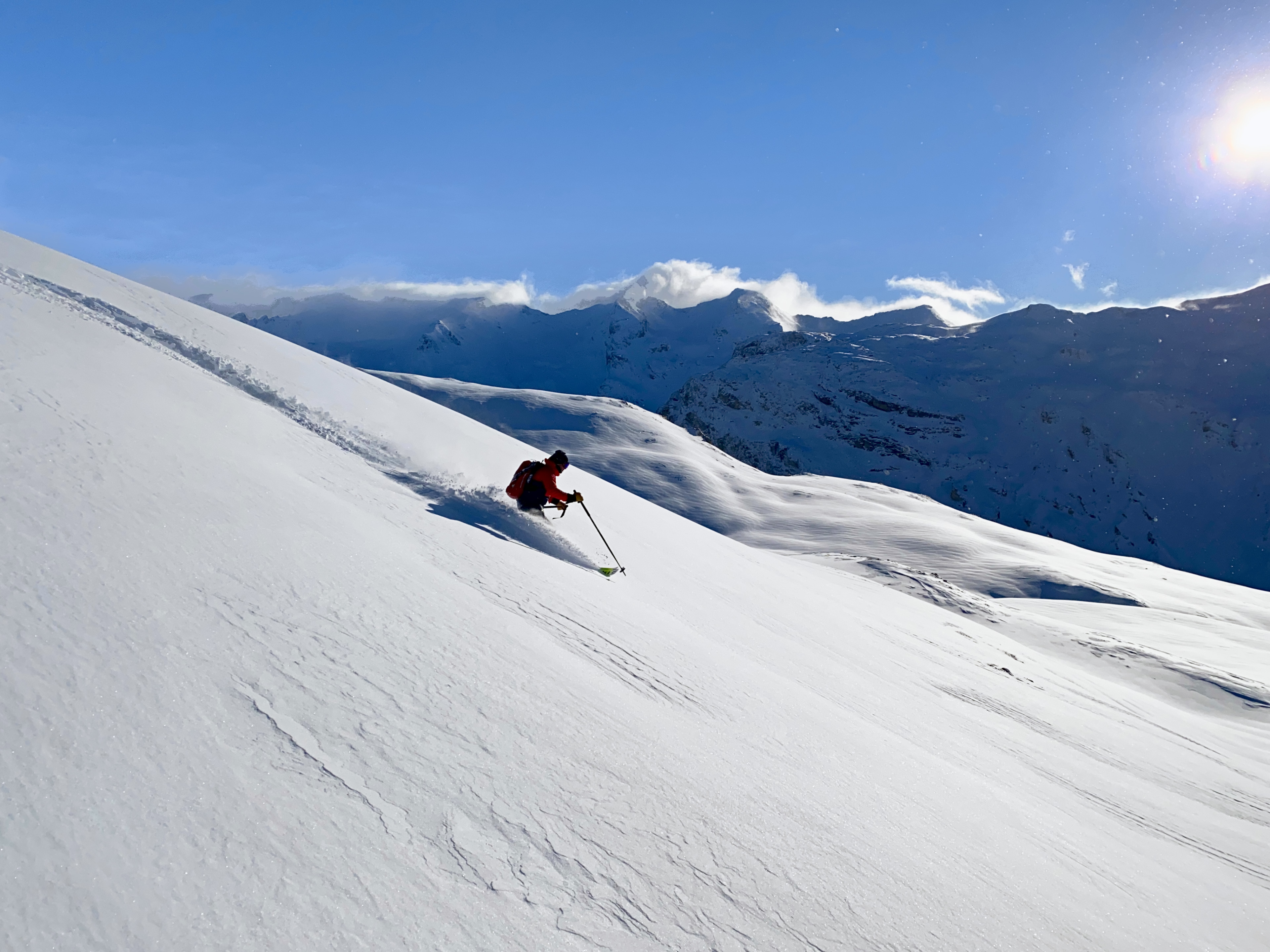
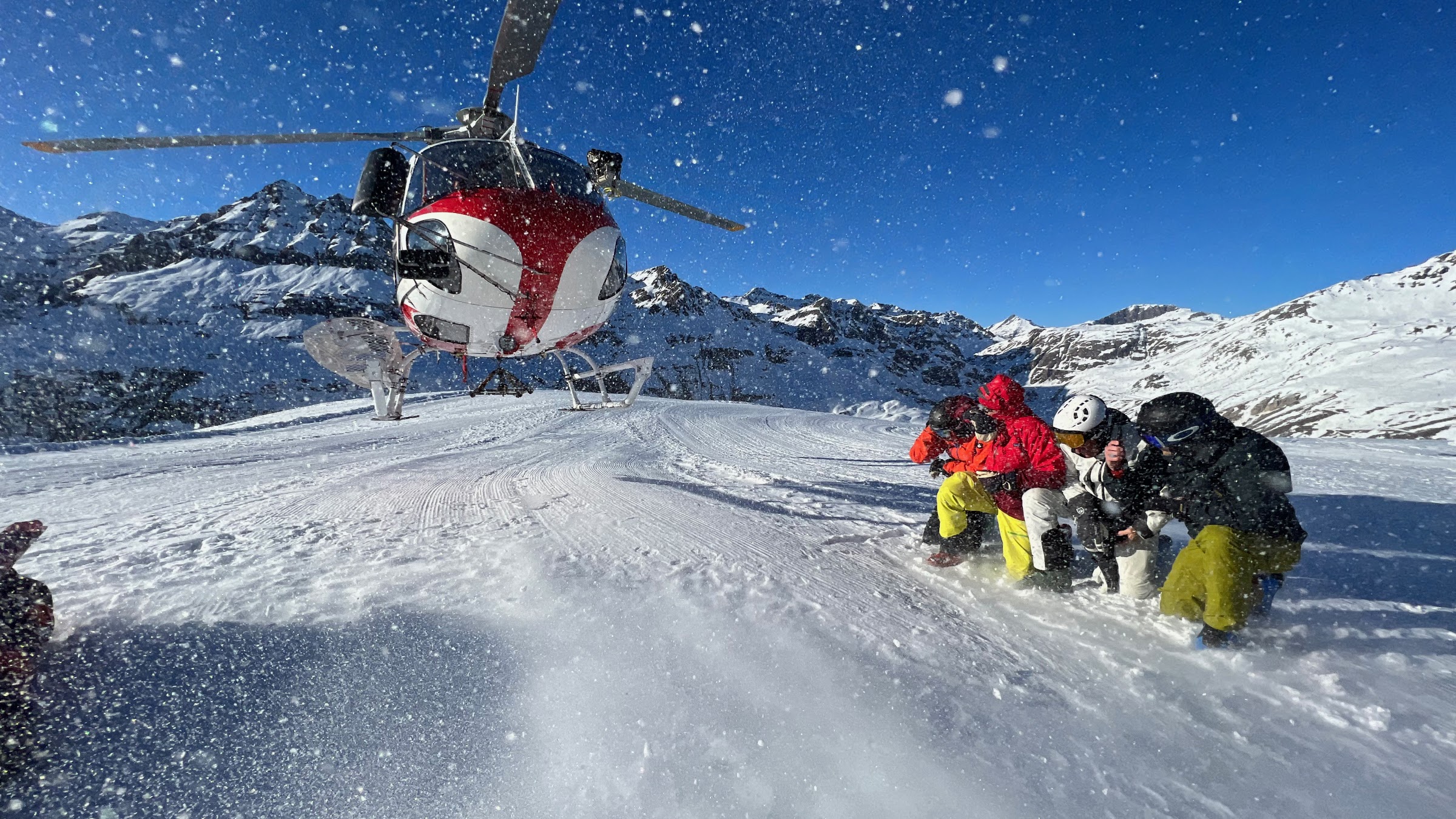
In Switzerland the helicopter sets you down on a select few mountain landing sites designated by the federal authorities, and heli skiing at Zermatt means a drop at around 4,200 metres on Monte Rosa and a glacier descent all the way to the valley.
In brief
- Where
- Zermatt, Valais, Switzerland: at the foot of the Matterhorn, on the north side of the Monte Rosa massif
- What sets it apart
- in Switzerland, heliskiers are set down on mountain landing sites designated by the federal authorities: a limited number of official sites, and that's where the rarity comes from
- Terrain
- three reference sectors (Monte Rosa at the Col du Lys, Alphubeljoch, Äschhorn), from the big glacier route to the high descent
- The high line
- a drop on Monte Rosa at around 4,200 m, a glacier descent of about 2,500 m down towards Furi; glacier experts
- Level
- a confident off-piste skier in every kind of snow at minimum; seasoned glacier experts for Monte Rosa
- Guiding
- a mountain guide, roped up on the glacier; avalanche airbag pack, transceiver, shovel and probe supplied
- Format
- Zermatt is the furthest of our bases: a destination for a stay of several days from Val d'Isère
- Price
- on request: Swiss heliskiing is among the most expensive in the Alps
- Season
- midwinter into early spring, depending on snow cover and the weather window
Fly to a select few landing sites above Zermatt, the Swiss exception
In Switzerland heliskiing is regulated. The helicopter sets skiers down on a limited number of mountain landing sites designated by the federal authorities: official sites, counted and mapped. It's a stricter frame than in Italy, and that's precisely what gives it its value.
That rarity has a price: heliskiing at Zermatt is among the most expensive in the Alps. In return you ski the north side of the Monte Rosa massif, at the foot of the Matterhorn, in a setting few places can match: the loftiest snowfields in the Alps bar Mont Blanc, and a resort that has made the mountains a way of life. Zermatt is a trip you choose for its own sake.
See all our heliski formats · Tell us your dates
Ski the other side of the ridge you know from Cervinia and Monterosa
For a skier who already knows our Italian bases, Zermatt makes obvious sense. You can ski the Monte Rosa massif on both sides of the border, and the Colle del Lys, or Col du Lys, is one of the points that links one flank to the other: you'll find it on our Cervinia and Monterosa pages, where some of the big routes run down to the Zermatt valley. Here, you're on the other side of the ridge. You ski the north side, the highest and coldest, the one that holds its powder late.
That makes Zermatt the Swiss counterpart to a Monte Rosa stay. Where Cervinia drops you under the Italian sun, Zermatt works the north side, on open glaciers falling towards Furi or Täschalp. The same mountain, two moods and two legal frames, and, for anyone with the level and the time, the chance to ski the massif in both directions on the same trip.
Stay a few days in the Valais, and let Monte Rosa set the pace
From Val d'Isère, Zermatt is the furthest of our heliski bases, on the far side of the Alps, which makes it a destination for several days. So we build Zermatt as a stay: you reach the Valais, sleep on the spot and ski over several days, with the slack that such a high mountain and a Swiss weather window demand.
It's also the right format. Monte Rosa seen from the north deserves the time: a day to get used to the altitude, another for the big glacier route when the sky is clear, dinner in the evening in a car-free village. We settle the transfer and the shape of the stay with you when you book. If you'd rather keep your nights in Val d'Isère, heliski at Valgrisenche, heliski at La Thuile and heli skiing at Courmayeur make a fine day out from the resort, and heliski at Sestriere makes another Italian stay.
See the Italian side: heliskiing at Cervinia · Monte Rosa from Alagna, Gressoney and Champoluc
Your Zermatt stay, quoted on request
Swiss heliskiing is priced to order, and Zermatt is among the most expensive destinations in the Alps. The rarity of the designated landing sites, the high altitude and the level of service account for much of it. The figure then follows the rotations (and so the vertical), the size of the group, where you stay and how you travel from Val d'Isère.
Share your dates, numbers, level and the skiing you have in mind, and our quote arrives within 24 hours.
Three sectors, from Monte Rosa to the Äschhorn
Three reference sectors map out heliskiing at Zermatt. Each is a mapped mountain zone tied to a designated landing site, and the guide combines them according to the snow, the weather and the group's form. The landmarks below are indicative: sectors rather than operational landing spots.
Monte Rosa / Col du Lys (indicative drop at 4,248 m, up to ~2,500 m of descent). Zermatt's big descent. A drop high on the massif, on the Col du Lys side, and a long glacier descent to the valley, the classic finish via Furi. High-mountain terrain, crevasses and seracs, roped up: glacier experts only, clear weather window required.
Alphubeljoch / Alphubel (indicative drop at around 3,600–3,800 m, up to ~2,300 m). A snow col between the Alphubel and the Feechopf, north of the ski area. A high descent back down towards Täschalp or Täsch, on the east side of the valley. Glaciated, for good advanced to expert skiers, depending on the day's conditions.
Äschhorn / Aeschihorn (indicative drop at around 3,500 m). A secondary summit of the massif, cited as a possible drop depending on the snow and the window. Glaciated terrain, advanced to expert. Indicative landmark: the final call rests with the guide on the morning.
The guide picks among these sectors day by day, going where the snow is holding, within the authorised landing sites and according to what the group can take on.
Ski within the Swiss legal frame
Heliskiing in Switzerland is legal, and tightly regulated. The helicopter drops skiers on mountain landing sites officially designated by the federal authorities, a limited number of sites defined and mapped at national level. The operators work within those authorised sites, and Zermatt has a few, on Monte Rosa and the high cols.
In practice, that means two things for you. First, rarity: because the sites are counted, each day there is precious. Second, a clear frame: unlike France, where recreational heli drops are banned, Switzerland allows them on these designated sites, which makes the organisation entirely legal. That exception is what draws us from Val d'Isère to Zermatt: a great flank of Monte Rosa, skied by helicopter, fully within Swiss law.
The detail of the authorised sites falls under federal regulation and may change; the guide and the local operator always work within that frame. See the official sources at the foot of the page.
Your stay in the Valais, day after day
Zermatt is the furthest of our bases, on the far side of the Alps from Val d'Isère, and Monte Rosa's altitude is best met with a day of acclimatisation, so we build Zermatt as a stay of several days.
How it works. We reach the Valais, sleep on the spot and ski over several days. That leaves time to get used to the altitude, to keep the big glacier route for the day the sky is clear, and to work with a weather window that, in the high mountains, keeps its own counsel.
We arrange · the local operator and the Zermatt heliport, the mountain guide and the safety kit, the pacing of the days and accommodation suited to your group. You bring · skis and boots (wide freeride skis are the best tool here; hire is possible), high-mountain clothing, and the stamina for several long glacier descents.
Send us your dates and the make-up of your group, and the programme takes shape around you.
Rope, kit and judgement on the north-side glaciers
Heliskiing at Zermatt means high mountains and open glaciers on the north side of Monte Rosa. At this altitude, every decision of the day starts with safety.
The kit, checked at the start. Every skier is issued an avalanche airbag pack, a transceiver, a shovel and a probe; we hand it all out before the first flight, test each transceiver for send and receive, and test again whenever the group splits between rotations.
The glacier: rope and crevasses. Monte Rosa and the Alphubeljoch are crevassed glaciers: the guide chooses when to rope up, threads the passages, keeps clear of the seracs and lays the track. Rope discipline is part of every descent.
The snowpack, read every morning. He studies the Swiss avalanche bulletin alongside what he has observed and the week's record, then chooses a sector. High winds rework the snow overnight, so yesterday's good slope is always read afresh.
Turning back, a mark of mastery. If visibility fades, the avalanche danger rises high or Monte Rosa's window proves too short, the guide switches sector or holds the heli. A guide's finest calls are often the rotations he leaves for another day, and that judgement is part of what you book.
> Every line here crosses unmarked, unpatrolled glacier terrain, where avalanche and crevasse risk are part of the landscape. Kit, rope and guide keep that risk in check. Snow, weather and visibility may shorten, move or cancel a day at any time; we take their word for it, every time.
Time your trip for the north-side snow
Heliskiing in the Valais turns on the snow cover and the weather window. Midwinter keeps the high north faces cold and light, and Zermatt's height and aspect hold good powder well into the season, while early spring turns the sunnier sectors to corn, best skied once the crust frozen overnight begins to give.
At around 4,200 metres on Monte Rosa, breathing comes shorter and every movement asks a little more than in Val d'Isère, another reason to make Zermatt a stay. Visibility matters too: the helicopter flies in clear conditions, and the big Monte Rosa route needs a cloudless sky. A little give in the dates lets us switch to the lower sectors if the window closes.
Safety above all. Heliskiing at Zermatt takes place on high-mountain glaciers, unmarked and unpatrolled, on the north side of Monte Rosa. The safety kit goes out and is tested before each flight (avalanche airbag pack, transceiver, shovel and probe); on the glacier the guide manages the rope and watches the bulletin and the snowpack day by day, and we reshape or postpone any day the conditions require. Here the risk is met with preparation, a sharp eye for the terrain and a readiness to call off a rotation. In Switzerland heliskiing takes place on mountain landing sites designated by the federal authorities; in France, recreational drops are banned.
FAQ
Is heliskiing legal at Zermatt?
Yes, within a strict frame. In Switzerland heliskiing is only allowed on mountain landing sites designated by the federal authorities, a limited number of official sites. Unlike France, where recreational heli drops are banned, Switzerland allows heliskiing within that frame, which makes organising it from Val d'Isère entirely legal.
Why is heliskiing at Zermatt so expensive?
Because the rarity is real. The authorised drop sites are counted; the high altitude and the level of service do the rest. Zermatt is among the most expensive heliski destinations in the Alps, and the price is built on request according to the rotations, the group, the accommodation and the transfer.
What level does heliskiing at Zermatt ask for?
At minimum, a confident off-piste skier in every kind of snow. The high sectors such as the Alphubeljoch already call for ease on a glacier. The big Monte Rosa route, at around 4,200 metres, is for experts used to the rope and glaciated terrain. We set the programme by your real level.
What's the big descent at Zermatt?
The drop on Monte Rosa, on the Col du Lys side, at 4,248 metres, followed by a glacier descent of about 2,500 metres down towards Furi. It's genuine high-mountain terrain, for glacier experts and a clear weather window. The sector landmarks stay indicative: the guide decides on the morning.
Can you choose the drop points at Zermatt in advance?
No: drops happen on designated sites, and the guide decides on the morning, with the snow and the weather, picking from the authorised sectors the aspects in the best condition for the group, so your day follows the finest snow on offer.
Can you link Zermatt with Cervinia or the Italian side of Monte Rosa?
We ski the massif on both sides of the border, and the Col du Lys drops onto either flank. For anyone with the level and the time, we can plan a trip that takes in the Swiss north side and the Italian south side. It's set case by case, according to the conditions and each country's own legal frame.
Is a heliski day trip from Val d'Isère to Zermatt possible?
No. Zermatt is the furthest of our bases, on the far side of the Alps. We organise it as a stay of several days, time enough to get used to the altitude, keep the big route for the clear day, and enjoy the village. The transfer and the format are settled with you at booking.
When would you like to see the Matterhorn from above?
To ski the north side of Monte Rosa over several days, let us know your dates, your group and your level, and your programme and quote follow within 24 hours.