Plan your dates · Val d'Isère
Altitude and snow cover: why the snow is better in Val d'Isère
A village sitting at 1,850 m, a glacier at close to 3,200 m, north faces that keep the fresh snow, a season that runs from November to May. Val d'Isère's snow has clear reasons behind it, and each kind of snow has its month, so you can choose yours.
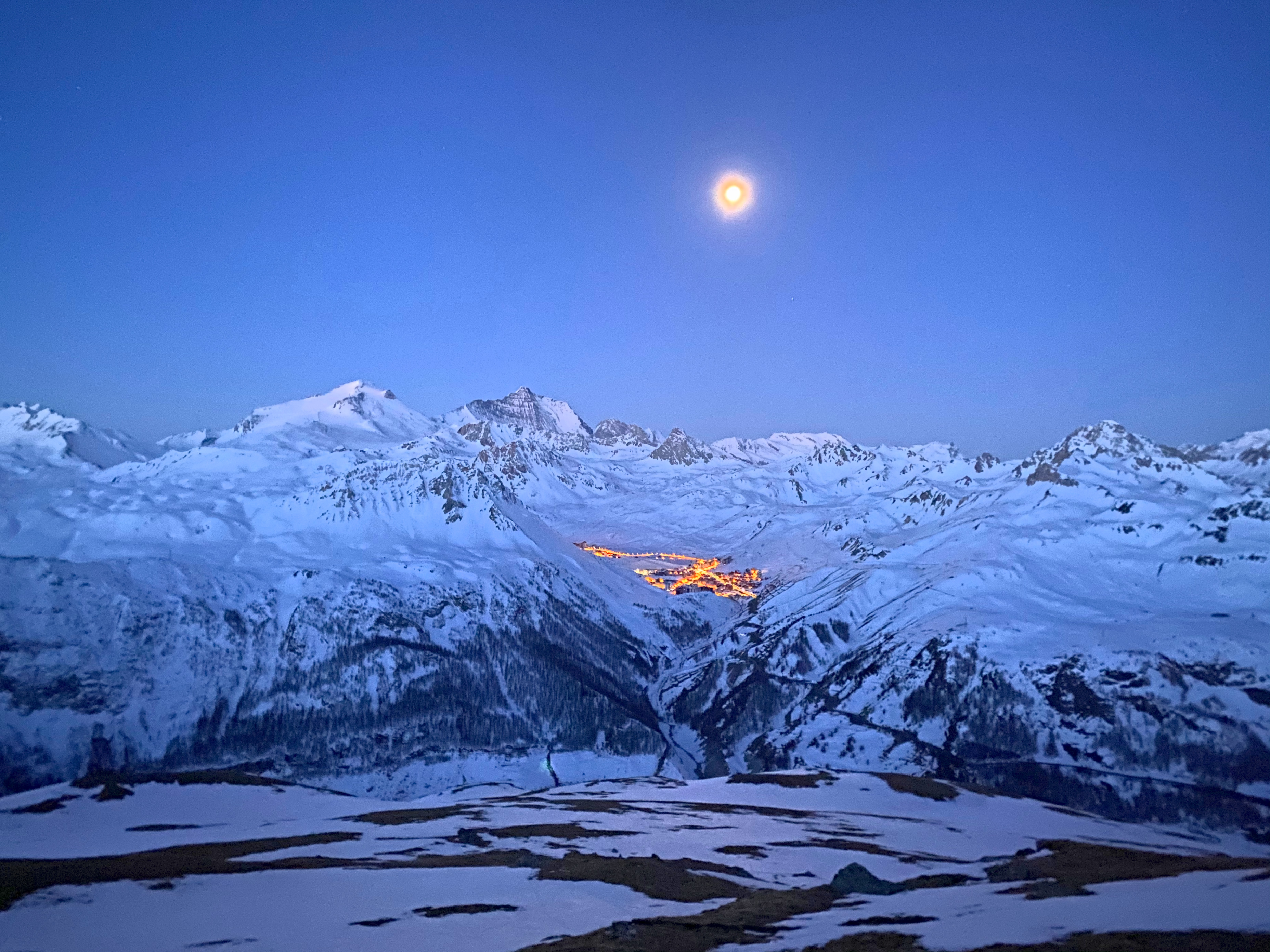
In brief
- Village altitude
- 1,850 m: one of the highest resort villages in the French Alps
- Le Fornet hamlet
- 1,950 m, the gateway to the highest sector
- Pissaillas glacier
- skiing at around 3,140 m on the Val d'Isère side
- Highest point of the ski area
- 3,456 m, Grande Motte sector on the Tignes side (Espace Killy)
- Skiable vertical
- close to 1,600 m between the valley floor and the summits
- Season
- long, from an autumn opening to late spring depending on the year
- Best powder
- the heart of winter, January–February · spring snow · from March
Where the snow settles best
Snow that stays once it has fallen is what makes a resort snow-sure, and what keeps it there, above all, is altitude. Plenty of resorts see heavy snowfalls; the ones that keep their cover through a mild spell, right down to the bottom of the runs, are the high ones.
In Val d'Isère, the village itself sits at 1,850 m. The figure looks unremarkable; it changes everything. A thaw that turns a lower resort to slush at 1,300 m usually just settles the surface here, before the cold takes hold again. That's the first reason, the simplest and the most solid, why Val d'Isère is among the most snow-sure resorts in the French Alps.
Altitude brings the cold, and the cold keeps the snow
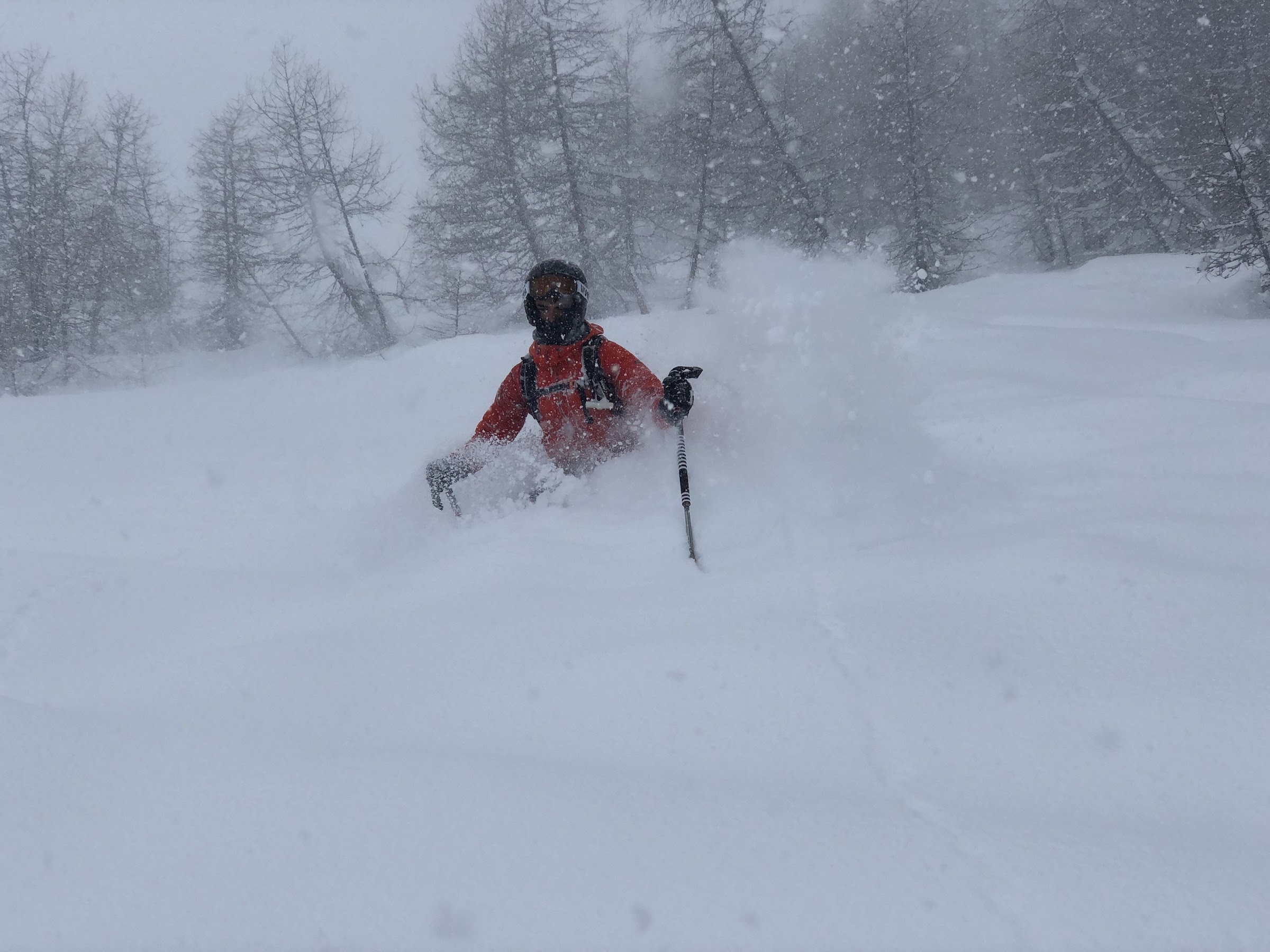
Roughly speaking, the air loses half a degree to a degree for every hundred metres you climb. Between a valley floor at 1,850 m and a glacier at 3,140 m, that's a good ten degrees' difference at the same moment. In practice: when it rains in the valley in a low resort, it's still snowing here; and when it snows at the bottom in Val d'Isère, it's freezing hard up top, which preserves the snowpack.
That layering is what gives the resort its flexibility. At any given moment the area offers several kinds of snow: cold, firm powder up high, softer, more tracked snow lower down. Knowing how to follow that layering through the day, sun in the morning, shade in the afternoon, is your first step to skiing Val d'Isère well.
Ski from 1,850 m to 3,456 m, from the village to the top
The village of Val d'Isère sits at 1,850 m, a height that places it among the high-altitude resorts of the French Alps, a real advantage for the snow at the bottom of the runs, where cover is tested first. The hamlet of Le Fornet, at the far eastern end of the valley, rises to 1,950 m.
At the top, the ski area climbs high. On the Val d'Isère side, you ski the Pissaillas glacier at around 3,140 m; the highest point of the Espace Killy stands at 3,456 m, in the Grande Motte sector on the Tignes side. Between the valley floor and those summits lie close to 1,600 m of skiable vertical, enough for linked descents of rare length, and above all for finding the right snow at the right altitude on the day. The sector-by-sector layout is on our Val d'Isère ski map.
The Pissaillas glacier — cold snow for your mild days
Above Le Fornet, the cable car opens the way to the highest sector of the ski area, and right at the top the Pissaillas glacier climbs to 3,197 m at the Montets drag lift. That's where you find the coldest, best-kept snow in Val d'Isère, often when it has already turned elsewhere.
A glacier is a reserve of cold: the snow keeps its quality there for longer, and the sector stays skiable when the lower slopes soften. It's the sector we save for mild days and the end of the season. The gentle run back down the glacier even lets you taste high altitude in complete comfort. (Glacier opening depends on the season; check the day's lift status.)
Aspect and north faces — follow the good snow through your day
Altitude makes the cold; aspect does the preserving. A north-facing slope gets little direct sun in midwinter: the snow stays cold and dry there, and keeps its quality for days after a snowfall, when a south face will already have turned.
Val d'Isère offers a real choice of aspects. Solaise faces the village in the morning sun; the north faces of Bellevarde and Le Fornet keep the fresh snow for the afternoon. That variety lets you follow the good snow through a single day: into the sun when it's cold, into the shade when it's mild. It's also what makes the local off-piste so rich, but the shade that keeps the powder also keeps the unstable layers, and that's where reading the avalanche risk becomes essential.
A long season: ski from autumn to spring
Thanks to that altitude and that glacier, the Val d'Isère season is one of the longest in the Alps, it usually runs from autumn to late spring, depending on the year and the lift openings. Where lower resorts close their bottom runs early, Val d'Isère holds its snow late up high.
That length of season changes how you choose your dates. December, February and April each bring a different mountain: the light, the snow and the mood of the valley change entirely.
Choose your month for the snow you want
The right time depends on the snow you're after, and each month has its own.
- December, start of the season, snow cover still building, the high sectors and the glacier first; fine conditions some years, thinner in others.
- January–February, the heart of winter, the most reliable cold and the most frequent powder. The prime time for off-piste and cold snow that holds. Short days, low, lovely light.
- March, often the best compromise: a good accumulated base, lengthening days, powder up high alternating with the first spring snow on the south faces.
- April–May, the reign of spring snow: you follow the overnight refreeze and the spring corn that softens by mid-morning on the sunny aspects, with high altitude and the glacier for fresh snow. A gentle mood, terraces in the sun.
Our advice as a school: January–February if you're coming for powder, March–April if you're after sun and spring snow. And whatever the month, ski the right aspect at the right hour. For the day-to-day Val d'Isère snow report, the resort's live conditions page and Météo-France publish the figures; this page explains why they tend to be good.
Snowmaking, a reliable back-up
Like every big resort, Val d'Isère relies on a snowmaking network to secure the link runs and the runs home, especially at the start and end of the season. It's a useful safety net; the snow itself comes from the sky and the altitude.
The resort's real reliability lies in its geography, the altitude, the glacier, the aspects, a position in the upper Tarentaise that catches the incoming weather systems. Snowmaking keeps the groomed area continuous; the off-piste we guide is natural snow through and through.
FROM ALTITUDE TO YOUR SKIS
All that snow, that altitude and that glacier come to life under your skis. Reliable snow cover is the promise of finding, almost certainly, good snow somewhere on the ski area on a given day, at a given altitude and aspect. The art lies in knowing where and when.
That's where we come in. We have skied this area since 2001: we know which bowl keeps its powder three days after a storm, which slope turns to corn first in spring, at what hour the Pissaillas is at its best. Whether you're planning a day on the Val d'Isère ski map or an outing in the Val d'Isère off-piste, the altitude brings the snow, and we take you to it. Off the pistes, you'll ski it alongside an off-piste ski instructor or mountain guide, the guide joining on request.
See our courses and outings in Val d'Isère →
A word from the founder
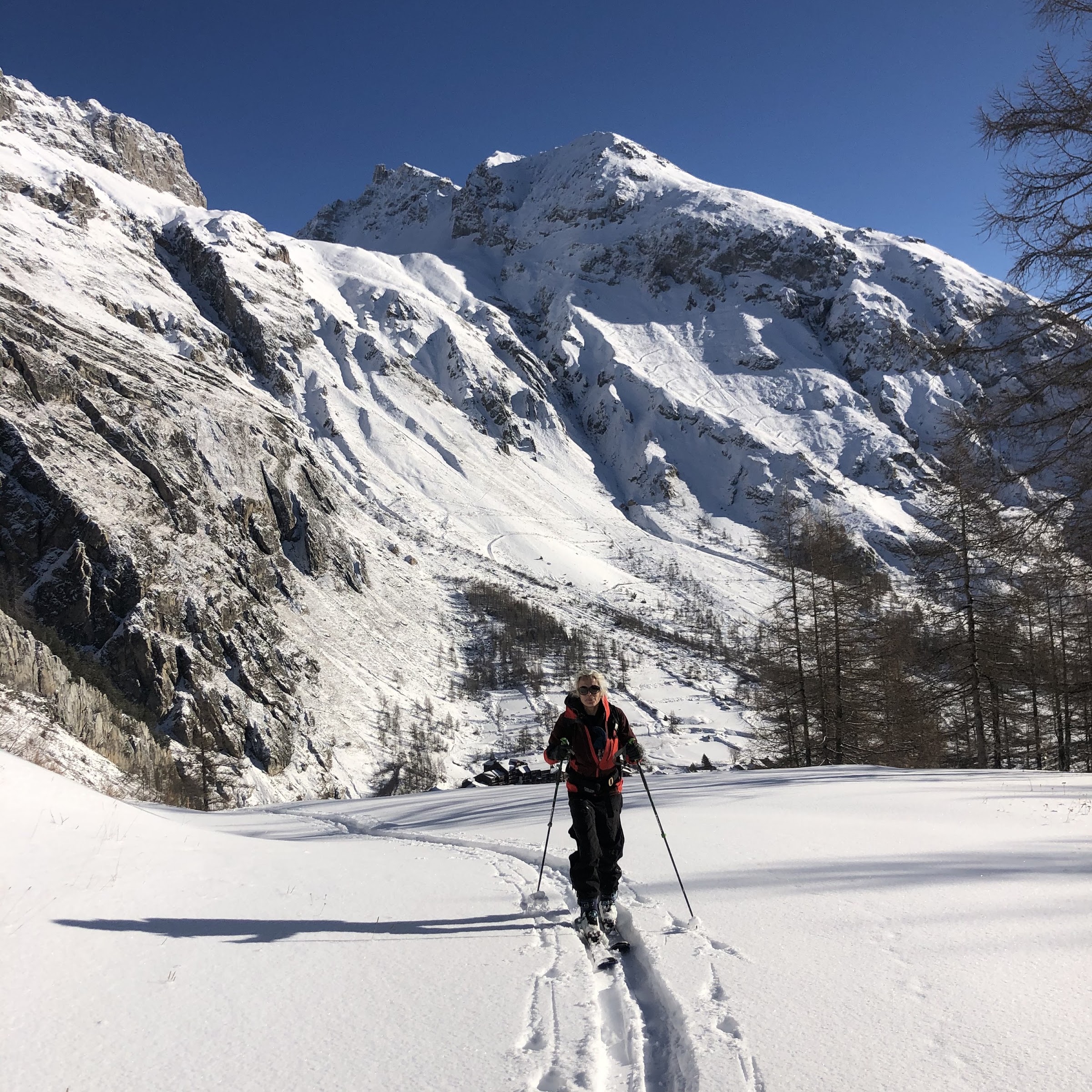
People often ask us which is 'the best week' to come. Each kind of snow has its own: a week for powder, a week for sunshine, a week for high altitude. What we can promise, after more than twenty seasons here, is that in Val d'Isère there's almost always good snow somewhere — and we know where to look for it.
PowderWeGo, off-piste ski school in Val d'Isère since 2001
Generous snow cover still calls for a careful read of its stability. The powder that holds on the north faces is also the powder that keeps unstable layers beneath the surface. As soon as you leave the groomed, marked pistes, you're in avalanche terrain, even in fine weather. Skiing off-piste means checking the Météo-France bulletin every morning, carrying and knowing how to use an avalanche airbag pack, a transceiver, a shovel and a probe, and being ready to turn back. On a guided outing we provide the safety kit and make those decisions with you.
FAQ
What altitude is Val d'Isère?
The village is at 1,850 m, which makes it one of the high-altitude resorts of the French Alps. The hamlet of Le Fornet rises to 1,950 m, you ski the Pissaillas glacier at around 3,140 m, and the highest point of the ski area stands at 3,456 m on the Grande Motte side (Tignes). Close to 1,600 m of skiable vertical in all.
Why is Val d'Isère so snow-sure?
Mainly because of altitude: a village at 1,850 m, summits beyond 3,200 m and a glacier. The cold at altitude preserves the snow when low resorts lose theirs. Add north faces that keep the fresh snow, a position in the upper Tarentaise that catches incoming weather systems, and a snowmaking network as back-up.
When is the best time for powder in Val d'Isère?
The heart of winter, January and February, brings the most reliable cold and the most frequent powder; it's the prime time for off-piste. March is still excellent, with powder up high and the first spring snow on the south faces.
When should you come for spring snow in Val d'Isère?
From March, and above all in April and May. You follow the overnight refreeze and the spring corn that softens by mid-morning on the sunny aspects, keeping high altitude and the Pissaillas glacier for cold snow. A gentle mood and terraces in the sun.
Can you ski on a glacier in Val d'Isère?
Yes, on the Pissaillas glacier above Le Fornet, up to 3,197 m at the Montets drag lift, the highest and coldest sector of the ski area, where the snow holds longest. Its opening depends on the season; check the day's lift status.
Does Val d'Isère have snow at the end of the season?
Yes, better than most resorts, thanks to its altitude and glacier: the upper slopes stay well covered late into spring when the bottom runs of lower resorts have melted. Closing dates vary each season with the snow and the lift openings.