Heliskiing in Italy · Upper Susa Valley · organised from Val d'Isère
Heliskiing at Sestriere: ski Piedmont's sunny slopes, from Val d'Isère
Ski five sectors and more than 80 mapped descents, runs of 800 to 1,600 metres, on terrain the guide picks each morning by the snow the night has left.
In brief
- Where
- Upper Susa Valley (Alta Val di Susa), Italian Piedmont: the Sestriere massif, above the Via Lattea ski area
- Terrain
- five sectors, more than 80 mapped descents, runs of 800 to 1,600 m of vertical
- A typical day
- up to around 5,000 m of descent, several drops depending on the snow and how the group is skiing
- Level
- a good off-piste skier, at ease in powder and in spring snow on a sustained slope
- Guiding
- a mountain guide; safety kit provided: avalanche airbag pack, transceiver, shovel and probe
- Format
- a stay in Piedmont rather than a day out, priced to order
- Departure
- Val d'Isère, by road or with a short flight across, as suits the group
- Price
- quoted on request, accommodation included, for the length of stay, the rotations, the group and the transfer you choose
- Season
- midwinter, snow and weather permitting
Cross into Piedmont from Val d'Isère, and feel the light change
From Val d'Isère you cross the pass and drop towards Piedmont. Sestriere lies a few valleys beyond the Tarentaise, yet the mountain feels different there: sunnier, drier, backed onto the huge Via Lattea ski area. That contrast is the whole point of heliskiing at Sestriere, organised from our door as a stay. You cross over at the start, then ski different snow under a different sky, with a proper Italian coffee between flights.
The Upper Susa Valley opens more than 80 descents across five sectors, between 800 and 1,600 metres of vertical a run. That figure matters because it lets the guide choose, each morning, the aspect that's holding: the north face that kept its powder, the shoulder that refroze overnight, the bowl that took the westerly wind. Five sectors give him a generous hand to play.
See all our heliski formats · Tell us your dates
Drop after drop, through a day above Sestriere
The day begins on the ground, kit in hand: avalanche airbag pack, transceiver, shovel and probe, all checked, transceivers tested for send and receive before the first flight. The guide studies the bulletin, the previous day's observations and the wind, chooses the opening sector, and the helicopter takes you up for the first drop.
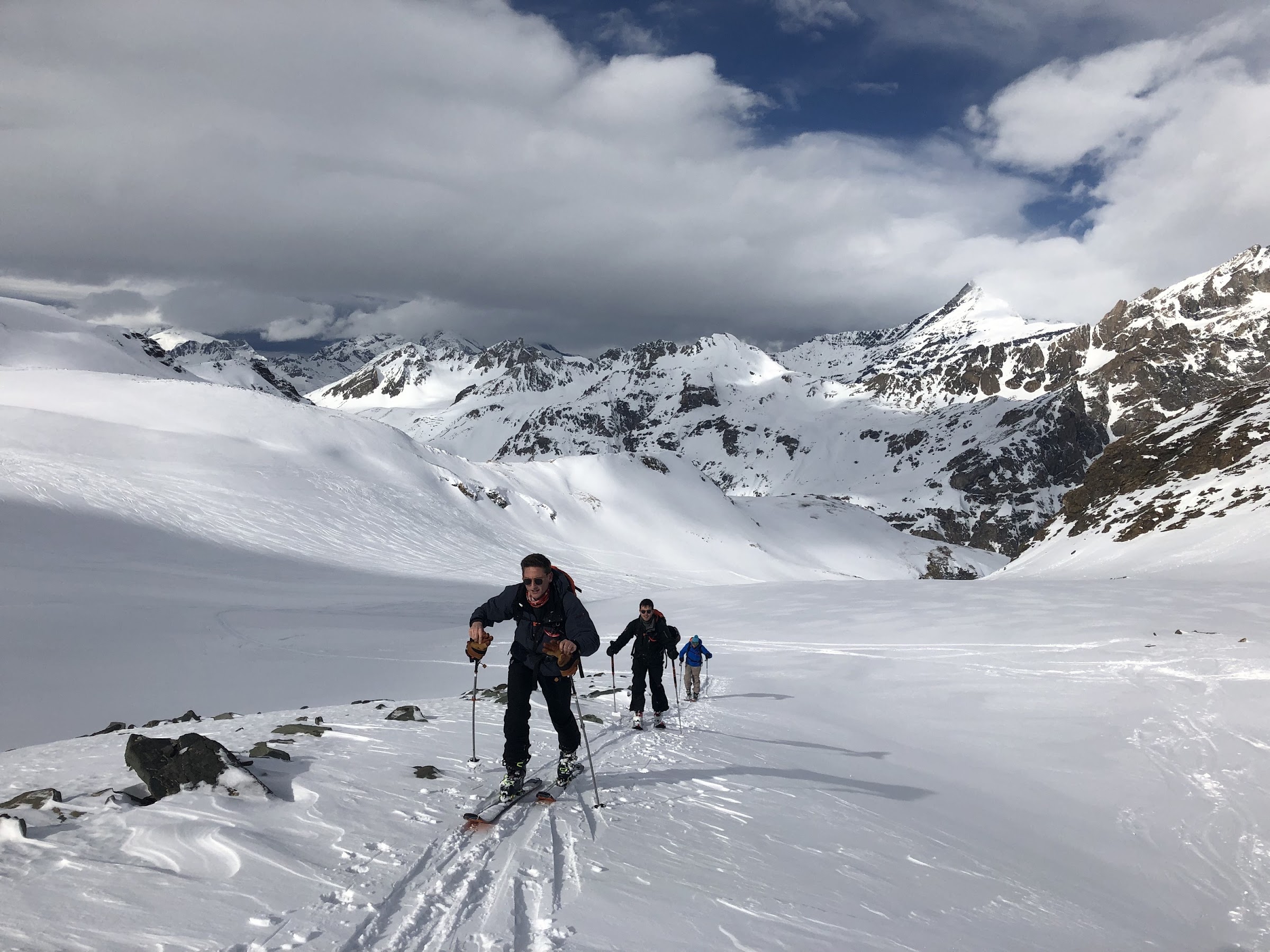
Then the rhythm sets in: dropped high, 800 to 1,600 metres of descent to a pick-up point, and the heli carries you on to the next aspect. On a typical day the rotations add up to something close to 5,000 metres of descent, which is why we ask for a genuine off-piste level. Between flights, lunch is taken in the sun, often at a refuge or beside a piste, with what Piedmont does best: a hot dish and a short, strong coffee.
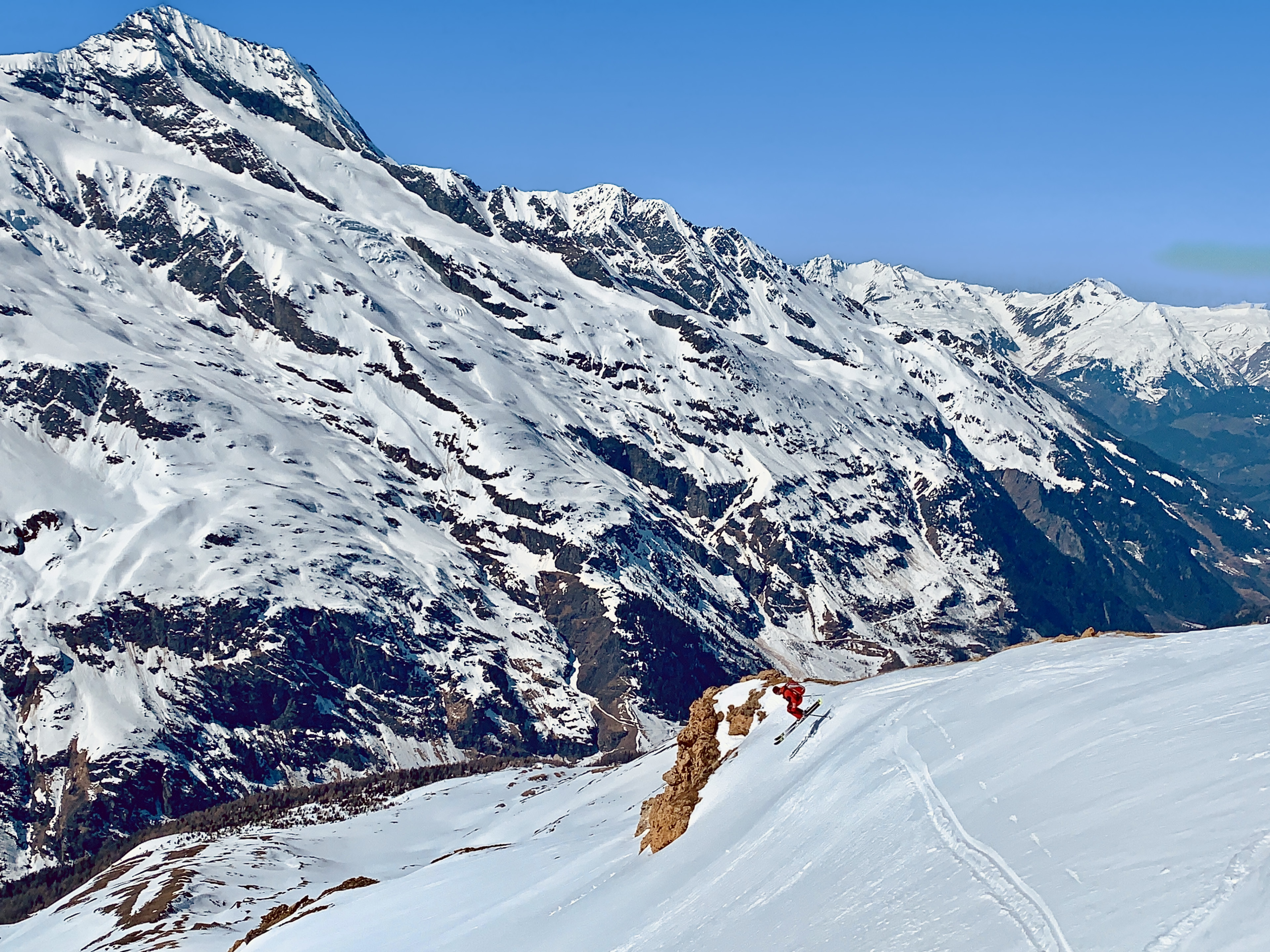
Best of all is the hush once the helicopter has banked away over the valley, with a whole untouched slope beneath your skis.
Five sectors and more than 80 descents to explore
Heliskiing in the Upper Susa Valley spreads across a fan of aspects running from Sestriere to the French border, around landmark peaks such as the Fraiteve (2,701 m), the Banchetta (2,777 m) and, higher and further out, the Chaberton (3,131 m). The guide picks the sector each morning, by the snow and the aspect.
Drop points stay flexible, chosen each morning, sector by sector, by the snowpack and the weather window, and that freedom gives the day the feel of a real mountain outing.
Closer to Val d'Isère, heliski at Valgrisenche, heliski at La Thuile and heli skiing at Courmayeur make a fine day out; like Sestriere, heli skiing at Cervinia, heliski at Monterosa and heli skiing at Zermatt are enjoyed as a stay.
A stay priced to order
Each Sestriere stay is shaped to order, and its price with it: the number of days and rotations, and so the vertical, the group size, your accommodation, and whether you travel from Val d'Isère by road or by air.
Tell us your dates, your group and your appetite for vertical, and a quote follows within 24 hours.
Five sectors, from Sestriere to the Chaberton
Five sectors, chosen each morning by the snow and the aspect. Each is a zone of terrain with its landmark peaks and its own character, open to the guide's choice.
Sestriere, Sises and Banchetta. The home sector, just above the village. Around Monte Sises (~2,658 m) and Punta Banchetta (2,777 m), broad sunny slopes: a good barometer to open the day and gauge the snow.
Fraiteve, Col Basset, Sansicario. Around Monte Fraiteve (2,701 m), the lookout over the Via Lattea, more varied ground dropping towards Sansicario and the Col Basset. Bowls, shoulders, changes of aspect: enough to follow the sun as the hours go by.
Sauze di Cesana, Val Thuras. Wilder, facing the upper Thuras valley. You leave the lifts behind, the mountain closes in, and the snow often keeps longer in the shelter.
Cesana, Claviere, Montgenèvre, Chaberton. The border sector, under the outline of Monte Chaberton (3,131 m) and its old forts. The highest and most alpine, kept for good conditions and strong groups.
Sauze d'Oulx. A more wooded, sheltered flank, precious on days of poor visibility, when flat light makes open ground unreadable and you need trees and terrain features to read the slope.
A few of these sectors make each day, in the order the snow and the sun suggest.
From the first drop to the last run of the day
Morning. We gather, the safety kit goes round and is checked, and the guide explains the snow and his choice of sector. Then the first flight, and the first drop up high.
The rotations. Drop, descent of 800 to 1,600 metres to a pick-up point, flight to the next sector: the pattern repeats as the day unfolds. How many depends on the group's appetite and the weather window.
The vertical. A typical day can come close to 5,000 metres of descent. That's a lot of off-piste skiing, and it calls for the technique to enjoy it from the first run to the last; we talk it through with you at booking.
Lunch. Midday is spent in the sun, between two aspects. A hot Piedmontese dish, an espresso, and on to the next rotation.
End of the day. One last descent, the final pick-up, and back down to the valley, the day's lines still running through your head.
From kit check to the right call: safety in Piedmont
Off the pistes of the Via Lattea you ski unpatrolled high-mountain terrain, and safety sets the pace of every rotation.
The kit, before take-off. Every skier carries an avalanche airbag pack, a transceiver, a shovel and a probe; the full set is issued before the first flight, transceivers checked for send and receive, and checked again if the group splits across rotations.
The snowpack, read every morning. The Piedmont avalanche bulletin, the guide's own observations and the week's history all go into the choice of sector. The snow changes overnight, and the plan with it.
The right call, at the right time. Knowing when to stop belongs to the craft as much as knowing where to fly. Should the avalanche danger be high or the window short, the day is scaled back, moved to another sector or kept on the ground. Calls like these are what you entrust to the guide.
The guiding. A mountain guide leads the day. Italy allows heliskiing where France forbids it, and a stay in the Upper Susa Valley lets you make the most of it.
> The terrain is wild, unmarked and unpatrolled. Kit and guiding lower the avalanche risk and keep it managed throughout the day. Snow, weather and visibility decide whether a day is shortened, moved or called off, and we respect their verdict on every flight.
Travel to Piedmont by road or by air
Sestriere is one of our furthest bases, so we organise heliskiing at Sestriere from Val d'Isère as a stay, its length and format settled with you, your accommodation included.
Two ways to reach Piedmont.
- By minibus · the road to the Italian departure base, easy and flexible to arrange.
- By helicopter · a flight across saves time and gets you skiing sooner, when the day and the group allow.
We fix the transfer together when you book, depending on the group, the weather window and the skiing you're after; the price follows the length of stay, the rotations, the group size and the transfer chosen.
Handled by us · the Italian base, the guide, the safety kit and the day's rhythm. Brought by you · skis and boots (wide freeride skis suit the terrain, and hire is available), mountain clothing, and a picnic unless you'd rather stop at a refuge.
Catch Piedmont's season, from cold snow to corn
Heliskiing in Italy follows the snow cover and the weather window. Deep winter keeps the lightest, coldest snow on the north-facing sectors, and early spring turns the sunny aspects to corn, best caught as the overnight freeze eases.
Piedmont is famously sunny, and many days here are spent under a clear sky when the French side is grey. Visibility remains the deciding factor: the heli flies when the air is clear. We therefore keep a little flexibility in the dates, and if the window closes, the sheltered woods of Sauze d'Oulx are right on the doorstep, with trees to read the slope by.
Safety, flight by flight. Above Sestriere, heliskiing means unmarked, unpatrolled high-mountain terrain. The safety kit (avalanche airbag pack, transceiver, shovel and probe) is issued and checked before every flight. The guide watches the avalanche bulletin and the snowpack day after day, and any outing can be reshaped or postponed when conditions ask for it. The kit opens the day; preparation, a careful read of the slope and a readiness to turn back carry it through. Piedmont, like the rest of Italy, permits heliskiing.
FAQ
Is heliskiing legal at Sestriere?
Yes. In Italy heliskiing is allowed, and the Upper Susa Valley around Sestriere is one of its settings, while France prohibits it. From Val d'Isère, a border crossing puts you on the right side of the law.
How many runs can you ski in a heliski day at Sestriere?
It depends on the snow, the weather and how the group is skiing. A typical day links several rotations of 800 to 1,600 metres of vertical and can come close to 5,000 metres of descent in all. The guide adjusts the number of rotations as the day goes on.
What kind of skier is heliskiing at Sestriere for?
You need to be a good off-piste skier, at ease in powder and in spring snow on a sustained slope, with the stamina to link several long descents. It suits skiers who already know off-piste well: that volume of vertical calls for real technique.
Can I book specific descents at Sestriere?
No. The programme takes shape that morning with the snow and the weather, as the guide picks from the five sectors the aspects in the best condition. Heliskiing runs on exactly that flexibility.
How does the transfer from Val d'Isère to Sestriere work?
By minibus or by helicopter, at the start and end of your stay, as agreed when you book: the road is simplest, the helicopter gains time on the snow. The choice rests on how many you are, the forecast and the vertical you want.
How much does a heliski stay at Sestriere cost?
It's on request and includes your accommodation; we work it out from the length of stay, the rotations, the number of skiers and the Val d'Isère transfer. Send us your dates and ideas, and you'll have our quote within 24 hours.
What safety kit is provided for heliskiing at Sestriere?
Each skier gets an avalanche airbag pack, a transceiver, a shovel and a probe, tested before the first flight. A mountain guide leads the day. Bring your skis, boots and mountain clothing; we handle the rest.
Ready for Piedmont sunshine?
For a stay among Sestriere's five sectors, send us your dates and the size of your group, and your quote follows within 24 hours.